What happened
E. coli from animal contact or recreational water
E. coli lives in the guts of cattle, sheep, goats, and deer without making them sick. Which means the exposure routes include a great deal more than food: touching animals or their environment, swallowing untreated water, and person-to-person spread.
These claims are analysed as ordinary premises and operator negligence rather than product liability, and the applicable standards are surprisingly specific.
Published July 29, 2026 · Last reviewed July 30, 2026
Animal contact venues
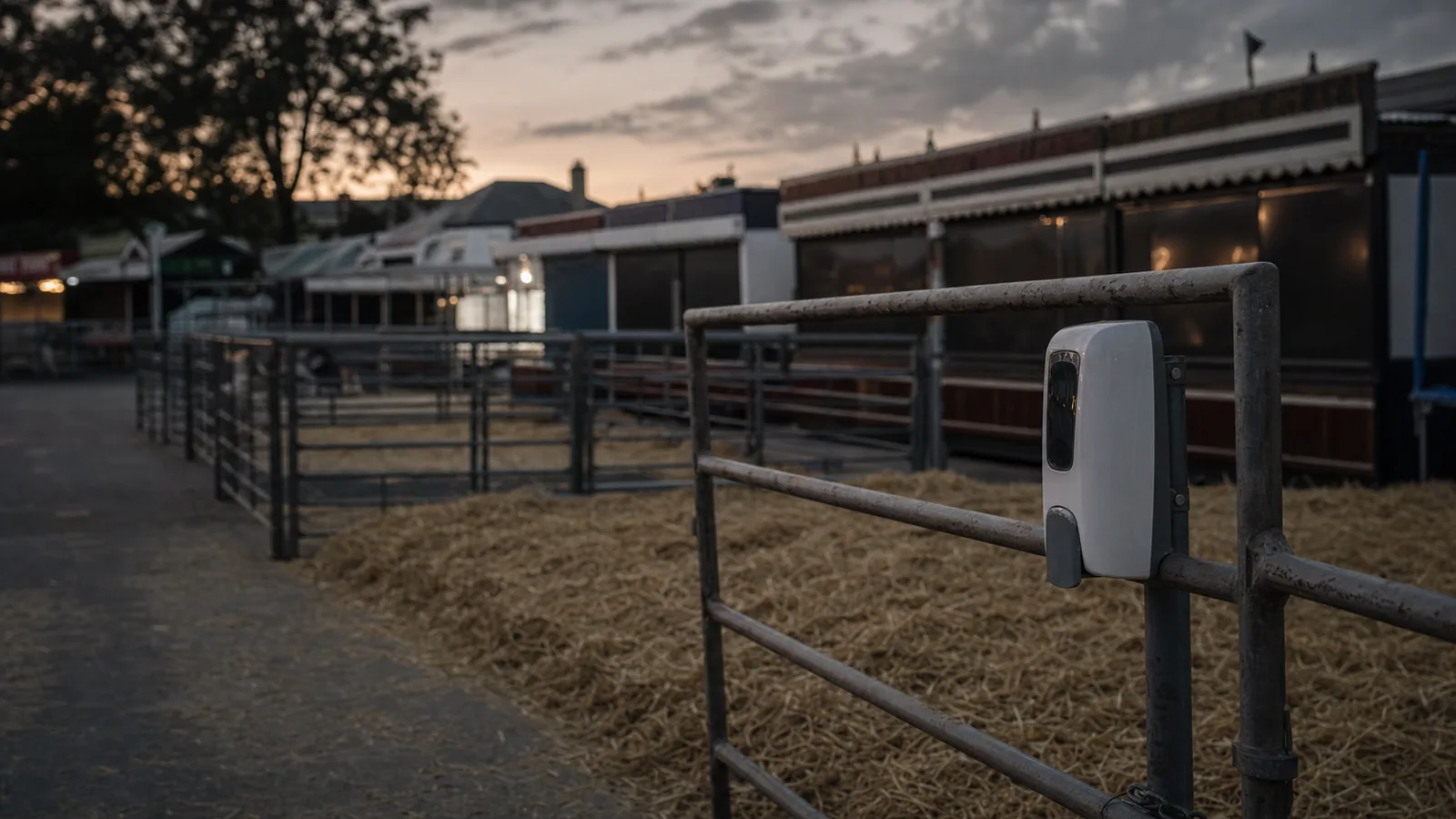
Petting zoos, county and state fairs, agritourism farms, and school farm visits are a recurring source of paediatric E. coli outbreaks, and the failure modes repeat year after year.
There are well-established public health recommendations for these settings — separating animal areas from eating areas, providing properly designed handwashing stations rather than only hand sanitiser, supervising children, controlling what enters animal areas, and posting clear signage. Hand sanitiser is specifically inadequate against this organism when hands are visibly soiled.
An operator who put a food concession next to a goat pen with a single hand sanitiser dispenser and no handwashing station has departed from published guidance, and that departure is documentable.
Recreational and drinking water
Untreated or inadequately treated water is the other major route. Swimming in lakes and rivers subject to agricultural runoff, splash pads and pools with failed disinfection, private wells contaminated by nearby livestock, and municipal systems following a main break or flood event.
Public pools and splash pads are regulated, inspected, and required to maintain disinfectant levels — and those logs exist. A facility that cannot produce compliant chlorine records for the day you swam has a serious problem.
Municipal systems must issue boil-water notices in defined circumstances, and a failure or delay in notification is its own claim.
Raw milk
Raw milk and cheese made from it are a persistent source, and these cases are legally distinctive: the product is inherently what it is, so the analysis often turns on warnings, on whether the sale was even lawful in that state, and on herd-share arrangements designed to work around retail bans.
Some states prohibit retail sale entirely, some permit it with mandated warnings, and a sale in violation of state law is powerful evidence of negligence in itself.
What tends to make a claim worth pursuing
None of these is a guarantee. They are the facts an attorney will look for first when deciding whether to take a case like yours.
- A lab confirmed STEC
- Exposure was at a fair, petting zoo, farm visit, or school trip
- Handwashing facilities were absent, broken, or sanitiser-only
- Food was served adjacent to animal contact areas
- Other attendees also got sick
- A pool or splash pad had disinfection failures
- The venue or operator carries commercial liability coverage
Questions
We signed a waiver at the farm entrance. Does that end it?
Not necessarily. Waivers vary enormously in enforceability by state, many are read narrowly, most do not cover gross negligence, and in many states a parent cannot waive a minor child's claims at all. Don't treat a signed waiver as the end of the conversation.
It was a public pool or a municipal water system.
Then a government entity may be involved, which changes the timeline sharply — claims against public bodies generally require a formal notice of claim within a short administrative window, sometimes 60 to 180 days, before any suit is possible. Treat it as a weeks problem, not a years one.
Could my child have caught it from another child?
Yes — person-to-person spread is well documented, particularly in daycare and among young children, and secondary cases within a household are common. It doesn't remove liability from whoever caused the primary infection; it extends the chain.
Read next
Other situations

I'm part of an outbreak
The strongest position in food litigation. Federal investigators do the causation work.
Read this
I got sick after eating out
Provable only if the organism was confirmed. The meal you suspect is often the wrong one.
Read this
HUS — kidney failure
The catastrophic outcome, mostly in young children. These are the highest-value food cases there are.
Read thisEvidence and research resources
See all resourcesEvidence checklist
The records, objects, photographs, and timelines worth preserving now.
Read thisPlain-language glossary
Medical, insurance, safety, and legal terms explained without the jargon.
Read thisOfficial sources
The government, court, safety, and medical sources used to check this site.
Read thisHave a lawyer look at this
A free review tells you whether the facts you have are the facts that matter. No cost, and no obligation to hire anyone.
Free · No obligation · About 90 seconds